ASME BTH-1 and ASME B30.20 - An Overview
The Value of a Life Is Not a Design Variable
There’s something we tell young engineers early and repeat often:
A lifting device doesn’t get a second chance.
Not because steel is weak. Not because calculations are wrong. But because people are standing under it.
Every below-the-hook lifting device carries more than load. It carries trust. It carries responsibility. And in many cases, it carries someone’s life.
That is the context in which standards like ASME BTH-1 and ASME B30.20 exist.
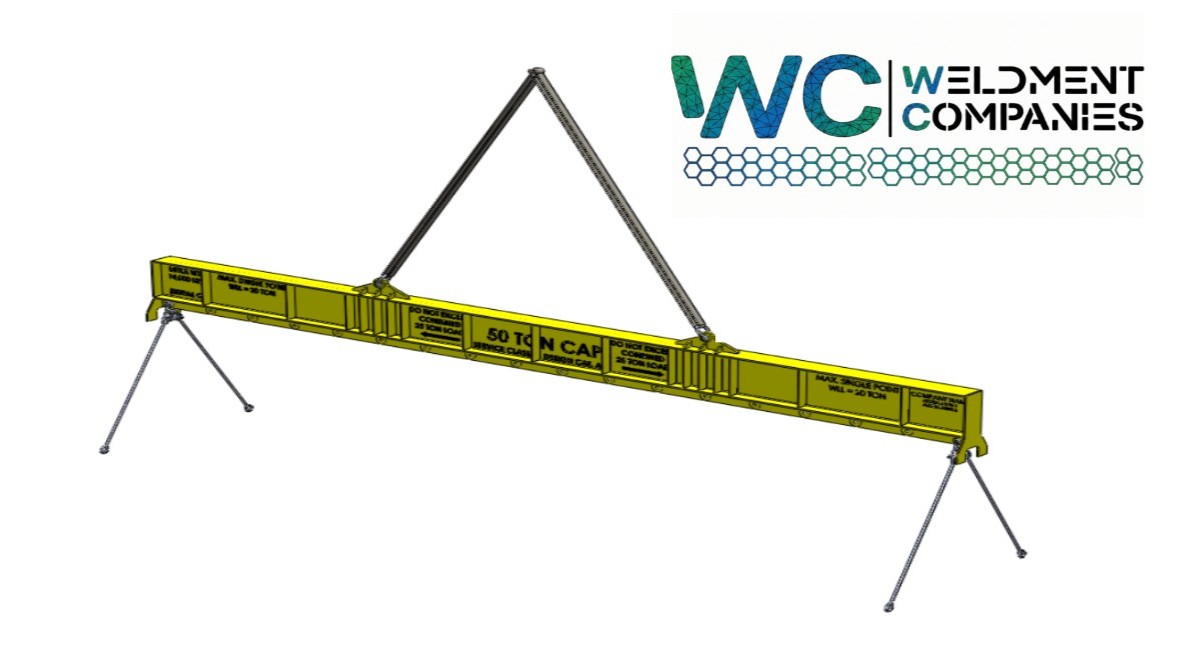
Not to slow engineers down. Not to add unnecessary paperwork. But to ensure every lift is predictable, controlled, and engineered with the understanding that failure is simply not an option.
Because in this space, success isn’t measured in efficiency or cost savings.
It’s measured by something much simpler:Everyone goes home.
Two Standards. One System.
If you take nothing else from this discussion, take this:
ASME BTH-1→ governs design
ASME B30.20→ governs everything after design
Most failures don’t come from ignoring both standards. They come from understanding one—and neglecting the other.
Together, they form a complete system. Separately, they leave gaps where risk lives.
ASME B30.20 — The Reality of Field Conditions
B30.20 defines the full lifecycle of a lifting device—from fabrication to daily use in the field. It governs marking, installation, inspection, testing, maintenance, and operation.
This is not a design standard. It is the operational control system around your design.
Marking: Defining Safe Use
Every lifting device must be clearly marked with:
Rated load
Identification or serial number
Manufacturer
Weight (when applicable)
This is not just labeling—it defines how the device is allowed to be used. Missing or incorrect markings introduce immediate and unnecessary risk.
Construction: Tied Directly to Engineering
B30.20 requires that lifting devices be designed or altered by a qualified person. That expectation ties directly back to BTH-1.
You are expected to:
Use recognized engineering methods
Ensure structural adequacy
Maintain fabrication quality
Inspection: Where Design Meets Reality
B30.20 defines three levels of inspection:
Initial Inspection– before first use
Frequent Inspection– based on service conditions
Periodic Inspection– detailed evaluation, often including NDT
Inspection focuses on:
Structural deformation
Cracks and weld condition
Wear points and connections
Engineering insight: If your design hides welds, blocks inspection access, or obscures critical load paths, it’s not just inconvenient—it’s non-compliant by design.
Testing: Verifying the Build
Lifting devices must undergo:
Operational testing
Load testing (typically 125% of rated load)
This validates:
Fabrication quality
Structural integrity
Assembly correctness
Operation: The Human Factor
Operators are required to:
Stay within rated capacity
Maintain stable, balanced lifts
Avoid shock loading
Keep personnel clear
And one of the most critical rules: Loads must never be left suspended unattended.
Environment: The Overlooked Variable
B30.20 requires consideration of:
Corrosion
Temperature
Wear
Duty cycles
If your design doesn’t reflect actual service conditions, the design isn’t complete.
ASME BTH-1 — Engineering the Device
If B30.20 governs the system,BTH-1 determines whether the system survives.
Design Categories and Service Class
BTH-1 requires classification based on:
Design Category (A–D)→ consequence of failure and fatigue sensitivity
Service Class (0–4)→ number of load cycles and usage severity
These directly define:
Allowable stresses
Design factors
Fatigue requirements
Mentor insight: Two identical lifting beams—one used monthly and one used 200 times a day—are not the same design. BTH-1 forces you to recognize that.
Load Cases: Designing for Reality
BTH-1 requires evaluation of:
Dead load (self-weight)
Rated load
Impact factors
Off-center loading
Load distribution effects
Because in real-world lifts:
Picks aren’t perfectly vertical
Loads shift
Rigging is imperfect
Your design must assume that.
Allowable Stress Design
Allowable stresses are defined—not guessed—based on:
Design category
Load type
Material properties
With reductions applied for:
Fatigue-sensitive components
Cyclic loading
Weld Design: The Critical Weak Point
Welds must be designed considering:
Load path
Fatigue category
Stress range
Geometry and transitions
Because most lifting device failures don’t start in the main member—they start at the weld.
Mechanical Components: Where Failures Actually Happen
BTH-1 also governs:
Pins
Shafts
Bearings
Load transfer components
Including checks for:
Shear
Bearing
Combined stresses
Failure rarely occurs in the obvious place. It happens at connections and transitions.
Common Failure Modes—and How the Standards Address Them
Weld fatigue cracking→ addressed through BTH-1 fatigue categories
Local yielding / overstress→ addressed through allowable stress design
Buckling / instability→ addressed through stability checks
Connection failure→ addressed through mechanical component design
Misuse / overload→ addressed through B30.20 marking and operational controls
Where Organizations Struggle
The issue isn’t a lack of knowledge.
It’s a lack of connection.
Engineering (BTH-1) → Fabrication → Testing → Inspection (B30.20) → Operation → Feedback into design
Without this loop:
Risk accumulates
Failures repeat
Lessons are lost
Our Approach — Building Capability, Not Just Devices
Designing a compliant lifting device is not the end goal.
The goal is consistency.
We help organizations:
Apply BTH-1 correctly and consistently
Align fabrication with engineering intent
Integrate B30.20 into real-world operations
Build repeatable internal standards
Because the objective isn’t to get one device approved.
It’s to build a team that gets it right—every time.
Final Thought
Below-the-hook lifting devices may look simple.
They are not.
They sit at the intersection of:
Engineering
Fabrication
Operations
Human safety
When done correctly:
They disappear into the process
They enable work
They protect people
When done poorly:
They become the weakest link
And in this space, there is no acceptable weakest link.
If your team is ready to move from assumption-based design to fully alignedBTH-1 and B30.20 engineering, the path forward isn’t just better calculations—it’s a better system.


